En
En Cn
Cn

Email:
huaren_inquiry@hdpharm.com
Jul 30, 2025
Dideoxynucleoside triphosphates (ddNTPs) are essential reagents in Sanger sequencing because they control DNA chain termination and enable researchers to determine the exact order of nucleotide bases. Unlike normal deoxynucleoside triphosphates (dNTPs), ddNTPs stop DNA extension after incorporation, creating a series of DNA fragments with different lengths that can be separated and analyzed.
Although the basic principle of ddNTP-based sequencing has remained consistent for decades, sequencing performance still depends on the quality and handling of the reagents involved. Factors such as the balance between ddNTPs and dNTPs, nucleotide purity, DNA template quality, reaction conditions, fluorescent labeling, and storage stability can directly influence sequencing accuracy and signal quality.
For laboratories involved in molecular biology research, genetic analysis, and biotechnology development, selecting reliable dideoxynucleoside triphosphates is important for achieving reproducible sequencing results. Huarenscience provides molecular biology reagents designed to support consistent experimental workflows where reagent quality and stability are critical.
The ratio between ddNTPs and dNTPs determines how frequently DNA chain termination occurs during a sequencing reaction. DNA polymerase naturally incorporates dNTPs to extend the newly synthesized strand, while the incorporation of a ddNTP stops further extension because the molecule lacks the 3’-hydroxyl group required for forming the next phosphodiester bond.
When the concentration of dideoxynucleoside triphosphates is too high, DNA fragments may terminate too early, resulting in a large number of short fragments and reduced sequencing read length. However, if ddNTP levels are too low, fewer termination points are generated, which may affect fragment distribution and make the sequencing signal less informative.
A properly optimized ddNTP-to-dNTP ratio creates a balanced collection of terminated DNA fragments covering different lengths. This distribution allows sequencing instruments to generate clearer fluorescence patterns and improves the accuracy of base identification.
The performance of 2 3 dideoxynucleoside triphosphate reagents is therefore not determined only by their chemical structure. Their concentration, compatibility with DNA polymerase systems, and suitability for the specific template all influence the final sequencing outcome.
The purity of sequencing reagents has a direct effect on experimental reliability. High-quality dideoxynucleoside triphosphates help ensure efficient incorporation by DNA polymerase and minimize interference that may affect fluorescent detection.
During manufacturing or storage, unwanted impurities or degradation products may influence enzyme activity, alter termination efficiency, or contribute to background signals. These effects can appear as weak fluorescence peaks, inconsistent signal intensity, or unclear sequencing regions.
For applications requiring high confidence, such as mutation screening, plasmid confirmation, and genetic variant analysis, reagent consistency becomes especially important. Using purified 2 3 dideoxynucleoside triphosphate products helps laboratories maintain stable sequencing performance between different experiments.
Huarenscience applies quality control procedures to its molecular biology products to support reliable research applications. Researchers can explore available reagent solutions through the Huarenscience products page when selecting suitable materials for sequencing workflows.
Even with high-quality dideoxynucleoside triphosphates, sequencing results may vary if DNA templates or reaction conditions are not properly optimized. The DNA template provides the sequence information being analyzed, meaning its purity, concentration, and structural characteristics can influence polymerase efficiency.
Templates containing residual contaminants, such as salts or proteins from sample preparation, may interfere with enzymatic reactions. In addition, DNA regions with strong secondary structures can slow polymerase movement and affect the distribution of terminated fragments.
Reaction conditions also determine how effectively ddNTPs participate in DNA synthesis. Parameters such as primer design, polymerase selection, magnesium ion concentration, and thermal cycling conditions influence nucleotide incorporation and signal generation.
When working with 2 3 dideoxynucleoside triphosphate reagents, researchers typically need to optimize the complete reaction system rather than adjust only one component. A balanced approach helps achieve accurate sequencing results while reducing troubleshooting time.
| Factor | Influence on ddNTP Performance | Possible Impact on Sequencing |
|---|---|---|
| ddNTP/dNTP ratio | Controls DNA termination frequency | Affects fragment distribution and read length |
| ddNTP purity | Influences polymerase efficiency and signal consistency | Determines sequencing accuracy and peak quality |
| Template quality | Affects DNA polymerase accessibility | Changes signal strength and sequence reliability |
| Reaction conditions | Regulate nucleotide incorporation efficiency | Influence reproducibility between experiments |
| Fluorescent labeling | Determines detection performance | Affects fluorescence intensity and base calling |
In fluorescent Sanger sequencing, labeled dideoxynucleoside triphosphates allow automated sequencing platforms to identify terminated DNA fragments. Each ddNTP type is generally associated with a different fluorescent signal, enabling instruments to distinguish between the four DNA bases.
The quality of fluorescent labeling affects how clearly sequencing instruments detect fragment differences. Consistent labeling efficiency helps produce stable fluorescence signals, while variations in labeling quality may lead to uneven peaks or reduced confidence during sequence analysis.
The chemical stability of labeled 2 3 dideoxynucleoside triphosphate molecules is particularly important because fluorescent signals must remain reliable throughout the sequencing workflow. Stable labeling chemistry supports accurate interpretation of electropherogram data.
For laboratories seeking dependable molecular biology reagents, Huarenscience focuses on providing products that support consistent performance across different research applications, including DNA sequencing and related workflows.
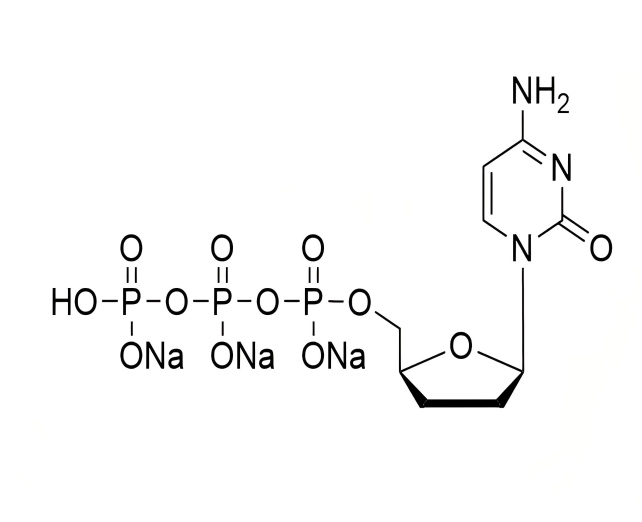
The stability of dideoxynucleoside triphosphates depends not only on their chemical quality but also on how they are handled and stored after production. As biochemical reagents, ddNTP molecules may gradually lose performance if exposed to unsuitable conditions, which can affect sequencing consistency.
Temperature fluctuations, repeated freeze-thaw cycles, prolonged exposure to light, and contamination during handling are common factors that may reduce reagent stability. Degraded or compromised ddNTPs may show reduced incorporation efficiency, weaker fluorescence signals, or inconsistent sequencing results between experiments.
Proper storage management is especially important for fluorescently labeled 2 3 dideoxynucleoside triphosphate reagents because the fluorescent groups attached to nucleotide molecules must remain stable for accurate detection. Following recommended storage temperatures, minimizing unnecessary opening of reagent containers, and avoiding repeated temperature changes can help preserve reagent performance.
For laboratories using sequencing reagents regularly, maintaining a consistent storage workflow is an important part of ensuring reliable experimental results. High-quality reagents combined with proper handling practices can significantly reduce variation caused by reagent degradation.
A poor sequencing result does not always mean that there is a problem with dideoxynucleoside triphosphates. Sanger sequencing is a multi-step biochemical process, and the final data quality depends on the interaction between the template, primer, polymerase, reaction system, and detection process.
One common reason for unclear sequencing results is poor template quality. DNA samples containing impurities or insufficient concentration may limit polymerase activity and reduce the amount of useful sequencing product generated. Difficult template structures, such as regions with strong secondary structures or repetitive sequences, may also affect extension efficiency.
Incorrect reaction optimization is another possible cause. An unsuitable balance between ddNTPs and dNTPs may lead to either excessive termination or insufficient fragment generation. Similarly, inappropriate primer design or reaction conditions can prevent 2 3 dideoxynucleoside triphosphate molecules from producing the expected termination pattern.
When troubleshooting unsuccessful sequencing reactions, researchers should evaluate the complete workflow rather than focusing on only one reagent. Checking template preparation, reaction setup, reagent quality, and instrument conditions together usually provides a clearer understanding of the problem.
| Sequencing Problem | Potential Cause | Recommended Consideration |
|---|---|---|
| Short sequencing reads | High ddNTP termination frequency | Review ddNTP and dNTP balance during reaction optimization |
| Weak fluorescence signals | Low template quality, labeling issues, or reagent degradation | Check sample preparation and reagent storage conditions |
| Overlapping or unclear peaks | Mixed templates or inefficient termination distribution | Improve template quality and reaction parameters |
| Different results between sequencing runs | Variation in handling or reagent stability | Maintain consistent experimental procedures |
Sequencing accuracy depends heavily on reagent consistency. Small differences in nucleotide purity, stability, or performance can become significant when laboratories analyze large numbers of samples or compare results across multiple experiments.
High-quality dideoxynucleoside triphosphates provide researchers with more predictable chain termination behavior, helping sequencing systems generate clearer and more interpretable results. This is particularly valuable in applications where accurate sequence information is required for downstream research decisions.
Huarenscience supports molecular biology laboratories by providing reliable biochemical reagents designed for research applications. Through careful quality management and a focus on product consistency, Huarenscience helps researchers build more stable sequencing workflows.
When additional technical information or application guidance is required, researchers can communicate directly with the Huarenscience team through the Huarenscience contact page to discuss suitable reagent solutions and support requirements.
The performance of dideoxynucleoside triphosphates in DNA sequencing is influenced by multiple interconnected factors. The balance between ddNTPs and dNTPs determines DNA chain termination patterns, while nucleotide purity affects reaction reliability and signal quality. In addition, template condition, reaction optimization, fluorescent labeling, and storage practices all contribute to sequencing performance.
Understanding how 2 3 dideoxynucleoside triphosphate reagents function within the sequencing process allows researchers to optimize workflows more effectively. Reliable reagents, proper experimental design, and careful handling together create the foundation for accurate and reproducible sequencing results.
For laboratories looking to improve sequencing consistency, selecting dependable nucleotide reagents and maintaining controlled experimental conditions are essential steps toward achieving higher-quality DNA analysis outcomes.
Dideoxynucleoside triphosphates are used in Sanger sequencing to terminate DNA chain extension at specific positions, generating fragments that can be analyzed to determine DNA sequences.
ddNTPs lack the 3’-hydroxyl group needed for continued DNA extension, while dNTPs contain this group and allow normal DNA strand growth.
High-purity ddNTPs reduce unwanted interference in polymerase reactions and help maintain clearer fluorescent signals during sequence detection.
A poor-quality template may reduce polymerase efficiency, causing weak signals, incomplete reads, or unreliable sequencing results.
They should be stored according to supplier recommendations, with protection from unsuitable temperatures, repeated freeze-thaw cycles, and unnecessary exposure to light.
Sequencing failure may result from issues with templates, primers, reaction conditions, reagent handling, or detection processes rather than ddNTP quality alone.